

Forests of Cooloola
Home > Visiting Kinaba > Forests of Cooloola
A variety of forests
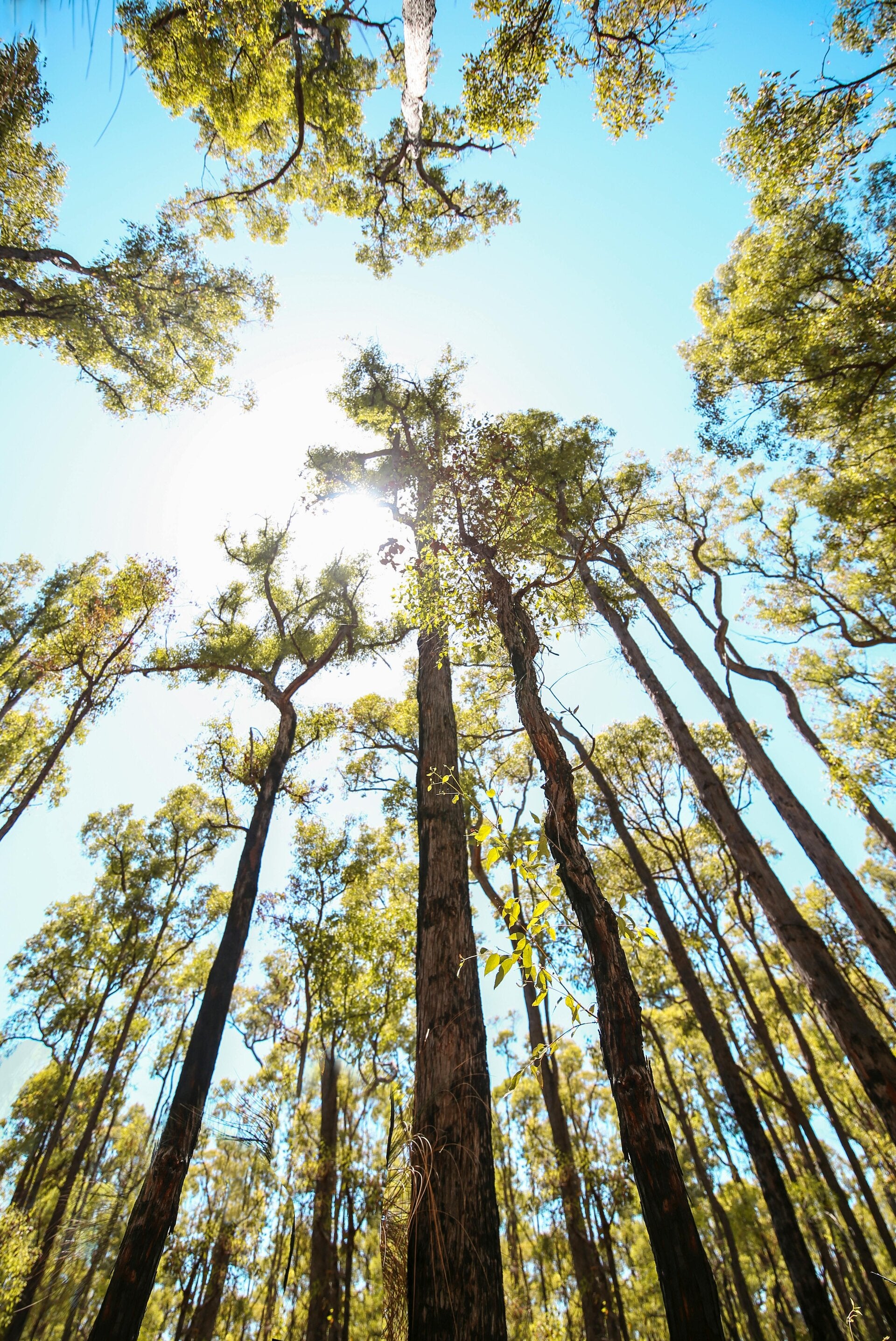
Cooloola is famous for its unique forests, which grow on some of the world’s largest sand masses. Despite the sandy and nutrient-poor soils, the region supports towering rainforests, coastal woodlands, wetlands, and a remarkable variety of plant life. High rainfall, nutrient recycling, and the close relationship between plant species help these forests survive and thrive.
A unique coastal environment
The forests of Cooloola have adapted to harsh coastal conditions, including salty winds, dry sands, and changing landscapes. Along the foredunes, hardy species such as Casuarinas, Pandanus, Coast Banksias, and Paperbarks form a protective barrier against the sea. Behind them grow large eucalypt forests, including Scribbly Gums, Bloodwoods, Blackbutts, and Tallowwoods.
The region is also home to many smaller plants and understory species, including wattles, palms, cycads, vines, orchids, and tree ferns. These forests create important habitats for wildlife and contribute to the rich biodiversity of the area.
Rainforests of Cooloola
Cooloola’s rainforests are especially remarkable because they grow on sand. Covering about 2,550 hectares, these forests contain trees reaching up to 50 metres high. Many rainforest areas stretch along the centre of the Cooloola sandmass, although only a small portion is protected within Cooloola National Park.
Important rainforest species include:
- Kauri Pine
- Hoop Pine
- Brush Box
- Satinay
- Strangler Figs
- Crab Apple
- Ribbonwood
- Bolly Gum
These rainforests support a complex ecosystem of towering trees, climbing vines, epiphytes, and dense understory plants.
Logging and conservation
Early logging removed many valuable rainforest trees, including Kauri Pines, Hoop Pines, and White Beech. Some species have slowly regenerated, while others remain uncommon. Today, Cooloola’s forests are recognised for their environmental importance and their role in protecting one of Queensland’s most distinctive natural landscapes.
Reference: Discovering Cooloola – a complete guide & map
by John Sinclair 1978