

Wildlife of Cooloola
Home > Visiting Kinaba > Wildlife of Cooloola
Cooloola's diverse wildlife
Cooloola is home to a rich variety of wildlife. Although the area has a vast amount of plant life, many animal populations are dispersed and can be difficult to spot. This is partly because Australia has fewer placental mammals than other continents, and because the environment has lower protein levels. Many animals are also shy and active mainly at night.
Visitors who are quiet and patient are often rewarded with sightings of Cooloola’s unique and diverse wildlife, which is almost as varied as its plant life. Check out our Wildlife photo gallery.
Mammals
- Grey Kangaroo (Macropus giganteus)
Mainly found in the western catchment area and on the Noosa Plain. - Swamp Wallaby (Wallabia bicolor)
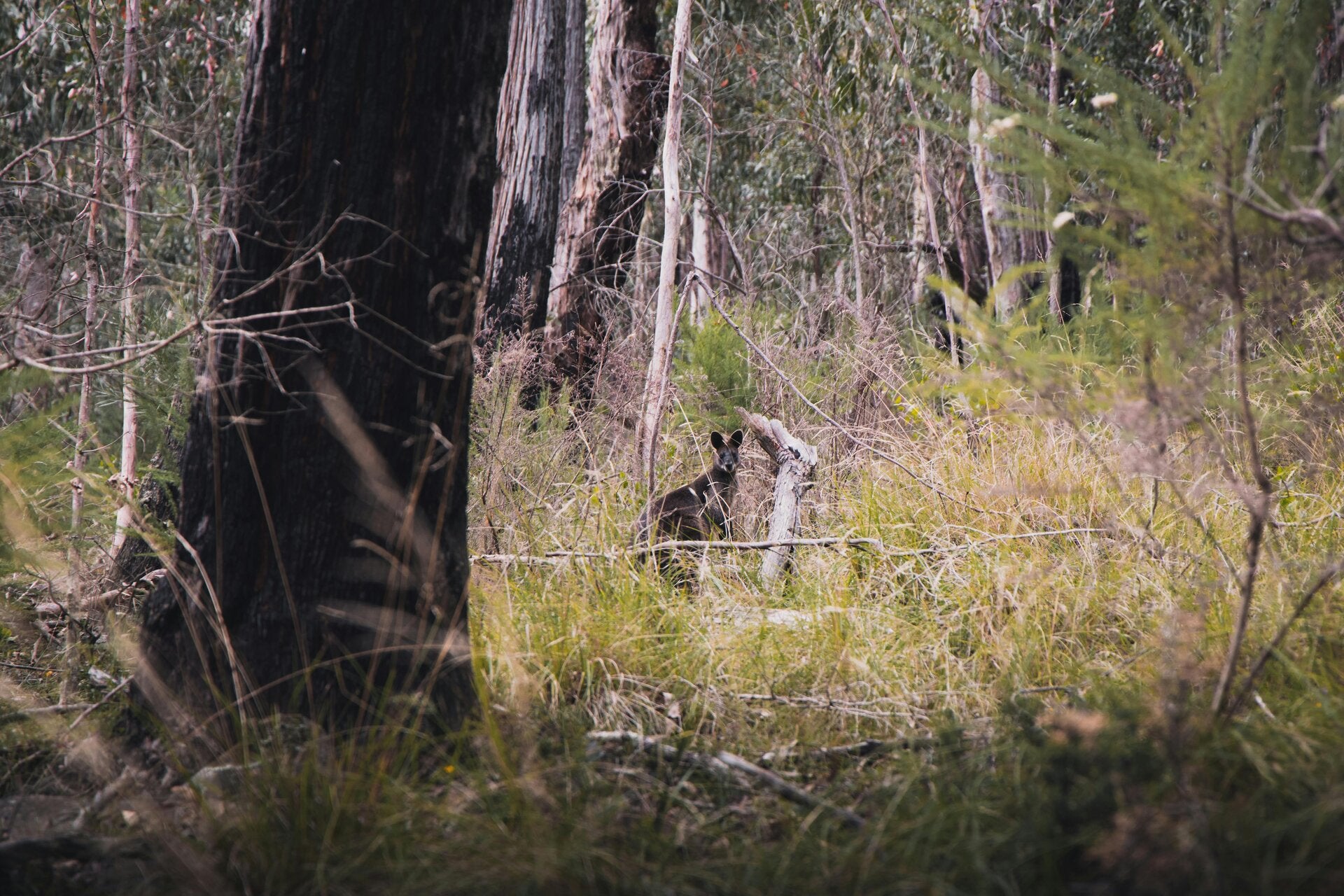
Commonly found among the sand dunes. - Yellow-Bellied Glider
Found in the western catchment near the Como Scarp in south-east Queensland. - Dugong
Large numbers of this endangered marine mammal feed on the rich seagrass beds of Tin Can Bay. - Fawn-footed melomys
The fawn-footed melomys (Melomys cervinipes) is a native, tree-climbing rodent commonly found in the Cooloola Recreation Area of the Great Sandy National Park. These agile, nocturnal foragers are a vital part of the local ecosystem, known for their distinct mosaic-patterned tails and preference for the park's coastal rainforests. - Koalas
Koalas are present in the Cooloola Recreation Area of the Great Sandy National Park, but sightings are rare.
Fish and frogs
- Australian Bass
Thrives in the clean and protected waters of the Noosa River within Cooloola National Park. - Acid Frogs
Five species of “acid frogs” live in the naturally acidic swamps and lakes of the Cooloola area.
Reptiles
- Lace monitor
Lace Monitors (also known as tree goannas) are frequently spotted in the Cooloola Recreation Area of Great Sandy National Park. As Australia's second-largest lizard, they can grow up to 2 meters long. They are commonly seen climbing trees or scavenging near campgrounds, often investigating picnic tables for food scraps. - Four-Fingered Skink
Rarely seen, with only a small number of recorded sightings. - Tiger Snake
Cooloola marks the northern limit of this species’ range. - Taipans, Death Adders and Brown Snakes
These snakes are rarely seen unless people actively search for them. - Pythons
Pythons are widely distributed throughout the diverse environments of the region, including coastal woodlands, heathlands, and lush rainforest pockets (such as along the Cooloola Great Walk)
Birds
More than 300 bird species have been recorded in the Cooloola region (see below).
Migratory wading birds
Tin Can Bay, as part of the Great Sandy Strait system, is an important stopover for migratory wading birds. Each autumn, many birds fly north to Siberia to breed, where they develop brighter breeding feathers before returning to Australia in October and November. Two major migration routes meet at Tin Can Bay, making it a vital habitat for these species.
Reference: Discovering Cooloola – a complete guide & map
by John Sinclair 1978
Land birds observed in Cooloola
